


Blockchain Commons creates courses and books to aid in the understanding and usage of digital identities and assets.
Our “From the Command Line” courses are intended to help developers understand a variety of technologies, including Bitcoin, FROST, and XIDs, while our “Smart Custody” book is user-focused, with the goal of helping you to ensure that your digital asset management is resilient.
Q: Why “From the Command Line?”
A: Learning “from the command line” supports hands-on experience, or experiential learning. It’s a proven pedagogical approach that helps to solidify concepts and commit them to memory. In courses like “Learning Bitcoin” and “Learning FROST”, it also allows for the examination of files and other outputs, so that you can dig as deep as you want on a topic. That’s why our courses are written “from the command line,” and why we suggest that you follow along on your own CLI.
Learning Bitcoin from the Command Line
|
Our original "Learning ... from the Command Line" course offers an entire curriculum on Bitcoin, using the bitcoin-cli interface found in Bitcoin Core. It includes details on classic Bitcoin transactions and scripts, then also describes programming with RPC command using Lightning in relation with Bitcoin. |
(This course is in the middle of a 2026 update courtesy of a grant from HRF.)
- Online Course: learningbitcoin.blockchaincoms.com
- Translations: Portuguese, Spanish
- Last Updated: In Process
Learning FROST from the Command Line
|
Our "Learning FROST" explains what FROST is and why you'd want to use it for signing over traditional signing systems such as multisig. It then provides a hands-on tutorial for signing with the ZF FROST tools, and also for integrating FROST signing with Bitcoin transactions. |
- Online Course: learningfrost.blockchaincommons.com
- Last Updated: 2025
Learning XIDs from the Command Line
|
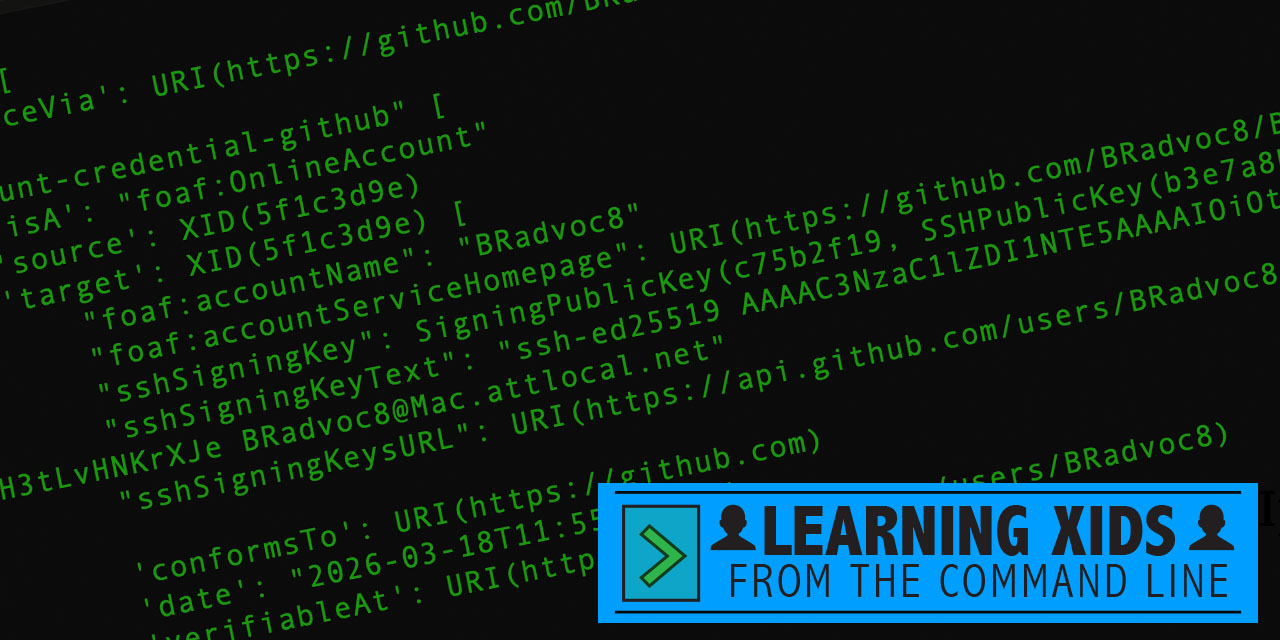
"Learning XIDs" talks about Blockchain Commons' decentralized identifier, demonstrating how to create it, use it, and expand it over time, and how to create new views (with elided information) and new editions (with added or removed information). |
- Online Course: learningxids.blockchaincommons.com
- Online Tutorial Playground: bcts Data Playground
- Last Updated: 2026
 Minor CLI Tutorials
The Developer Pages also contain the following, short tutorials that offer hands-on training for Blockchain Commons technologies:
- Learning Attestations. Creating fair witness attestations for XIDs.
- Learning Envelope. Intro, seeds, and salt for Envelope.
- Learning Key Hierarchies. XID key management as a reference for hierarchical best practices.
- Learning Pubblic Participation Profiles. Using XIDS to engage pseudonymously on projects.
Smart Custody
|
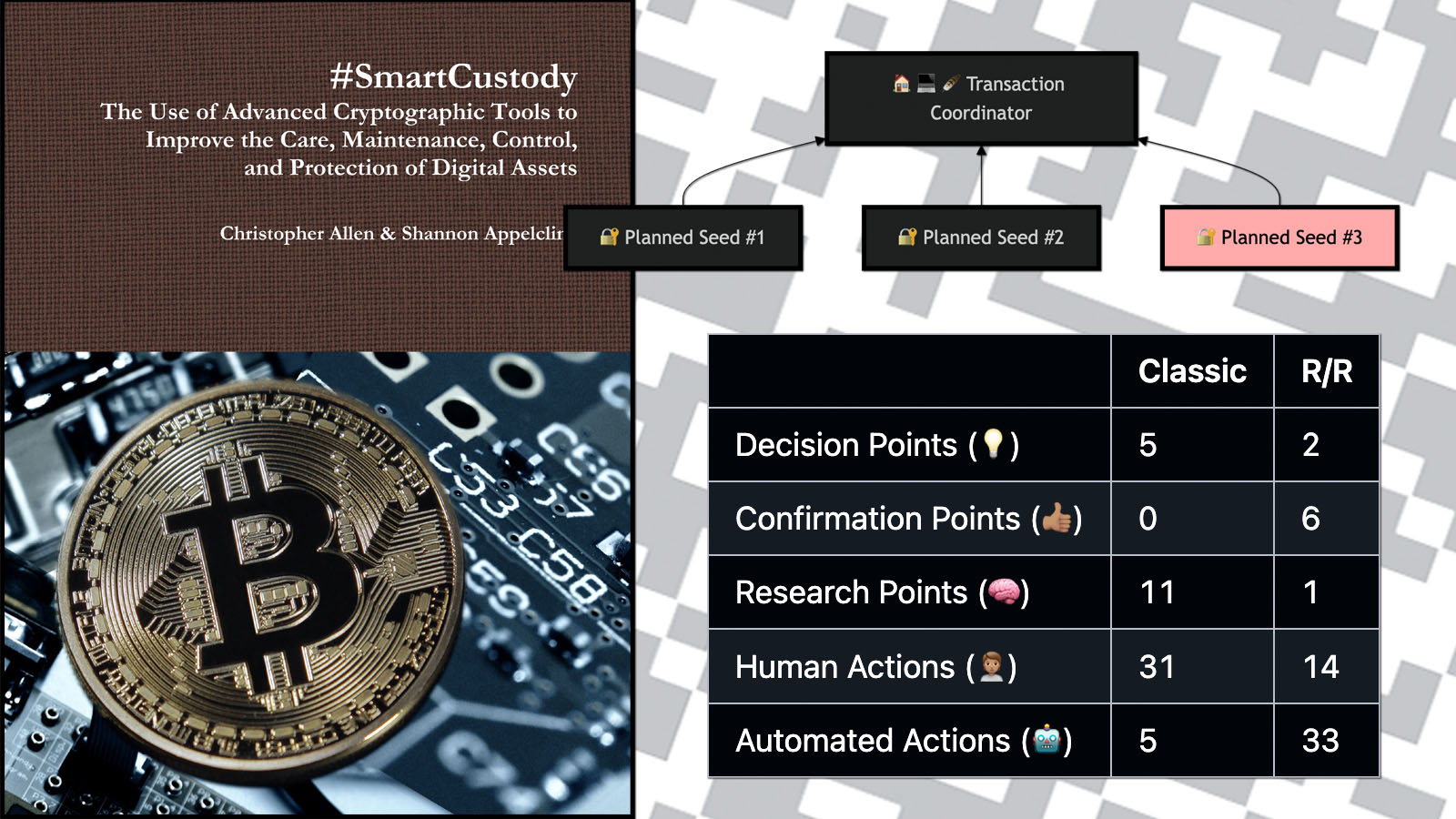
SmartCustody describes “The use of advanced cryptographic tools to improve the care, maintenance, control, and protection of digital assets.” The original book is user-oriented but a number of articles added since its publication support developers in creating smart-custody systems. |
- Web Site: smartcustody.com
- PDF Book: 194-page book
- Last Updated: 2019 (book), 2024 (articles)